
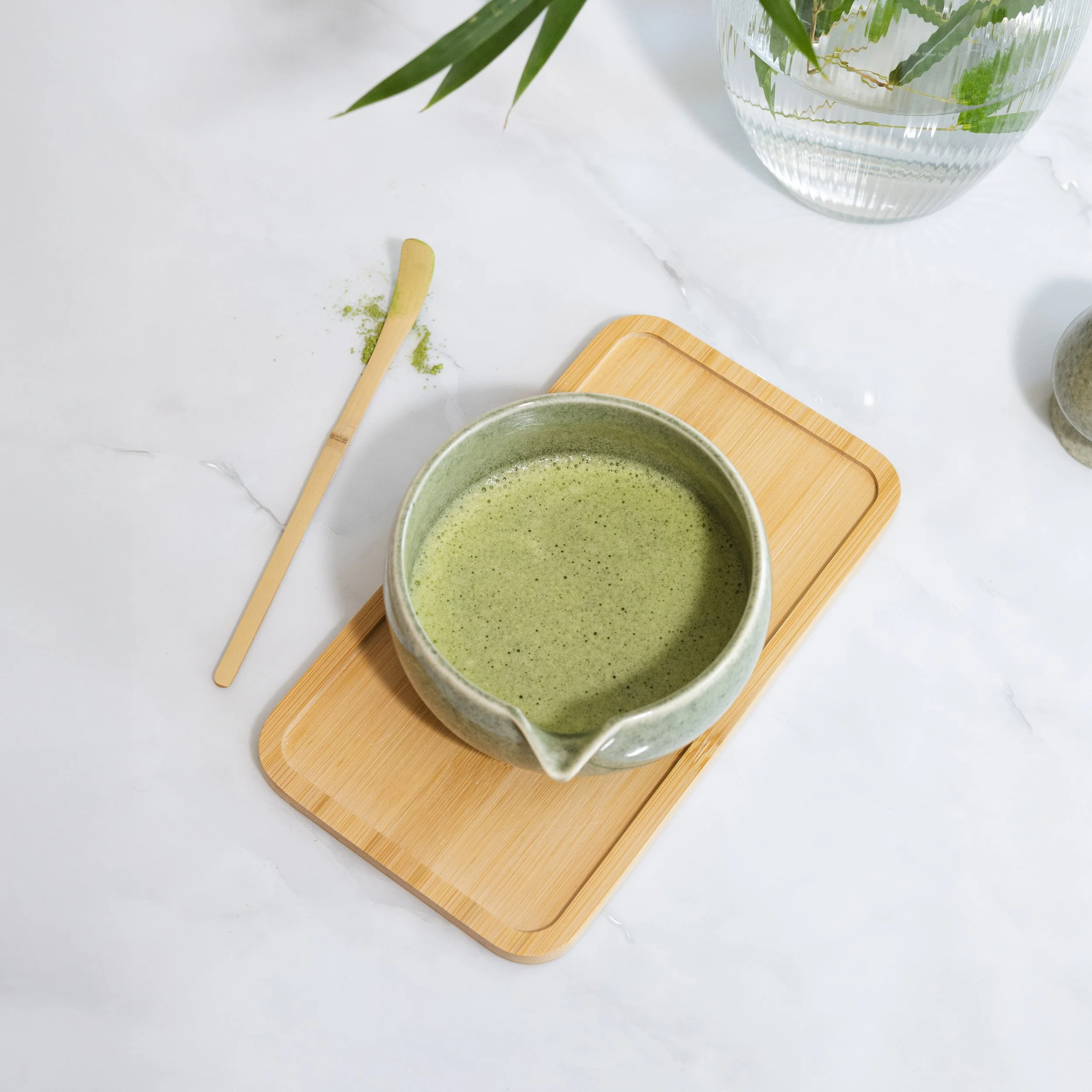
Starter Guides
-
Four principles of the traditional matcha tea ceremony
Core Aesthetic and Concepts
-
What do you need to get started?
-
How to hold and care for your matcha whisk?
-
A good bowl of matcha is not about perfection. It is about understanding a few core principles - light grip, sifted matcha powder, correct whisking motion and matching technique to tea style. Once these are in place, whisking becomes intuitive and meditative - a ritual that naturally slows you down.
-
-
FAQ & Troubleshooting Tips
Matcha Tea Ceremony: Background & Philosophy
-
The matcha ritual is centered on presence, harmony, respect and simplicity. It is about being fully present, not about perfection.
Wa (和) - Harmony
Wa represents harmony between people, nature and objects. In the tea ceremony, the host, the guest, the utensils and the environment are treated as one interconnected whole - nothing dominates and nothing is rushed.
In our daily life, wa invites us to seek balance amid constant stimulation: between work and rest, movement and stillness, digital and physical worlds.
In your daily matcha ritual, harmony is practiced by creating a small pause - aligning your breath, your space and your tools before whisking. The weight of the bowl in your hands, the sound of the whisk, and the warmth of the tea help bring scattered attention back into alignment. This moment of harmony becomes a quiet reset, grounding you before the day begins.
Kei (敬) - Respect
Kei is respect expressed through attentiveness and care. In the tea ceremony, this is seen in how utensils are handled, how tea is received and how each movement acknowledges the presence of another. Respect is mutual - not just between people, but also towards objects and the moment itself.
In our daily life, kei reminds us to slow down and treat everyday actions with intention.
Using your matcha set becomes an act of respect: placing tools carefully, whisking mindfully and drinking without distraction. This ritual trains awareness and mindfulness - helping us extend the same respect to our own time, energy and well-being, as well as to the people we interact with throughout the day.
Sei (清) - Purity
Sei symbolizes purity of space and mind. Before preparing tea, utensils are gently cleaned - not merely for hygiene, but as a symbolic clearing of mental clutter. This ritual prepares both the environment and the practitioner to fully enter the present moment.
In our daily life, sei can be practiced through small acts of reset. Before making matcha, you clear a surface, rinse the bowl and set aside distractions. These simple actions signal a transition - from noise to clarity, from thinking to being. Purity here is not perfection, but openness: creating a clean mental space where calm and focus can naturally arise.
Jaku (寂) - Tranquility
Jaku is the quiet tranquility that emerges naturally when harmony, respect and purity are practiced consistently. It is not something to be forced or chased. In the tea ceremony, jaku is felt in silence, in unspoken pauses, and in the steady rhythm of whisking.
In our daily life, this tranquility is increasingly rare - yet deeply needed. Through a daily matcha ritual, jaku becomes accessible again. As the movements become familiar, the mind settles. This calm does not remove you from life; it steadies you within it. You carry this composed presence into meetings, conversations and decisions long after the bowl is empty.
-
Wabi-sabi is the appreciation of impermanence, imperfection and simplicity. In the tea ceremony, it is reflected in hand-glazed bowls, uneven shapes and tools that age gracefully over time. Marks, variations and wear are not flaws - they are expressions of use and history.
In our daily life, wabi-sabi offers relief from the pressure to optimize, polish and perfect. Your matcha set embodies this philosophy: each piece is meant to be used, not preserved. A slightly uneven foam or signs of wear and tear - these are signs of a lived ritual. Wabi-sabi teaches us to accept ourselves and our days as they are, finding quiet beauty in what is real rather than ideal.
-
Ichi-go ichi-e reminds us that no moment will ever repeat itself in exactly the same way. In tea gatherings, this awareness encourages full presence because this encounter, this bowl of tea, this shared silence will never occur again.
Practiced daily, this philosophy transforms your matcha ritual into a moment of mindfulness. Even if you make matcha every morning, each cup is different - shaped by your mood, the light, the season and the pace of the day.
Ichi-go ichi-e teaches us to slow down, savor more deeply and honor even brief rituals as meaningful experiences rather than routines to rush through.
-
The Japanese tea ceremony is deeply influenced by Zen Buddhism, which emphasizes direct experience, mindfulness and simplicity. Preparing matcha becomes a form of moving meditation, where attention rests fully on each action, without separation between doing and being.
In our daily life, this offers a powerful counterbalance to constant multitasking. Making matcha with your set becomes a daily anchor - a simple sequence of actions that quiets the mind and reconnects you with the present moment. Through repetition and simplicity, the ritual creates space for clarity, grounding, and awareness, reminding us that calm is not something to achieve, but something to return to.
Together, these principles and philosophies transform matcha from a drink into a daily practice - one that gently integrates mindfulness into modern life. With each bowl prepared, your matcha set becomes not just a collection of tools, but a reminder to slow down, realign and return to what matters.
Lesson 1: Introduction
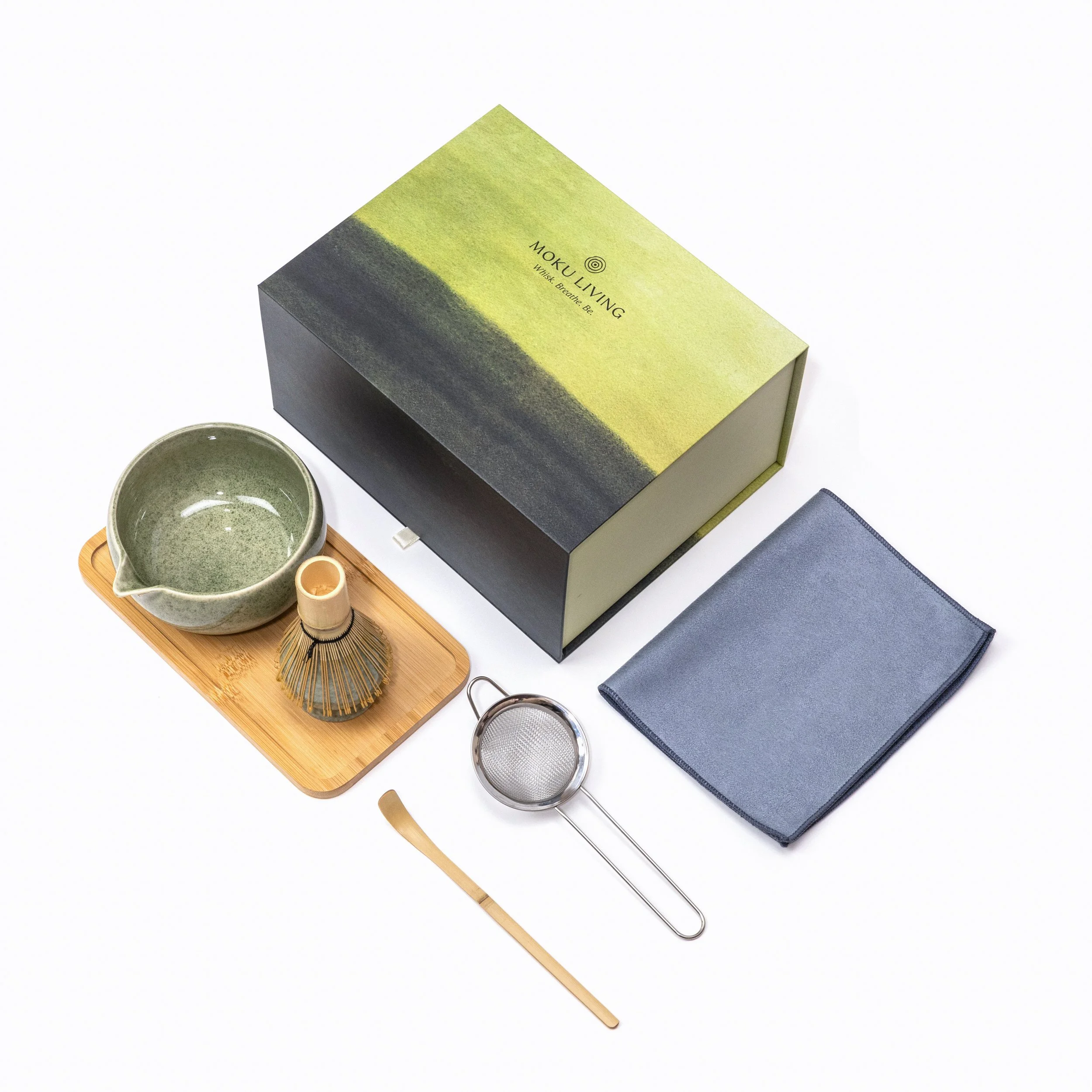
Tools that You Need to Get Started
-
Bowl used to whisk matcha.
You can choose to drink directly from the tea bowl.
Some designs come with a spout for easy spill-free pouring, which is especially useful for making matcha latte.
-
Bamboo whisk that creates silky foam.
-
Each scoop measures 1g of matcha powder.
-
To create a smooth, clump-free blend.
-
The use of the whisk stand can help to extend the lifespan of your matcha whisk.
Maintains Shape: It helps to keep the whisk tines in shape.
Drying: Allows the whisk to air dry thoroughly, preventing mold.
-
Cloth to reset and clean your tools.
-
Item description
Lesson 2: Understanding Your Matcha Whisk
The bamboo whisk, or chasen, is one of the most essential tools in matcha preparation. More than a utensil, it is a hand-crafted to transform powdered tea into a smooth, balanced drink. Understanding how your whisk works — and how to care for it — will dramatically improve both the taste of your matcha and the longevity of your tools.
When a whisk is new, the bamboo tines are dry and tightly curled. Blooming, i.e. soaking the whisk in warm water (around 60–70°C or 140–158°F), allows the bamboo tines to soften and open naturally.
Why this matters?
Prevents brittle tines from cracking
Improves flexibility and performance
Helps the whisk create smoother foam
Extends the lifespan of the whisk
For first use, soak the whisk in warm (not boiling) water for 1–2 minutes until the tines gently fan out.
Blooming Your Whisk for the First Time
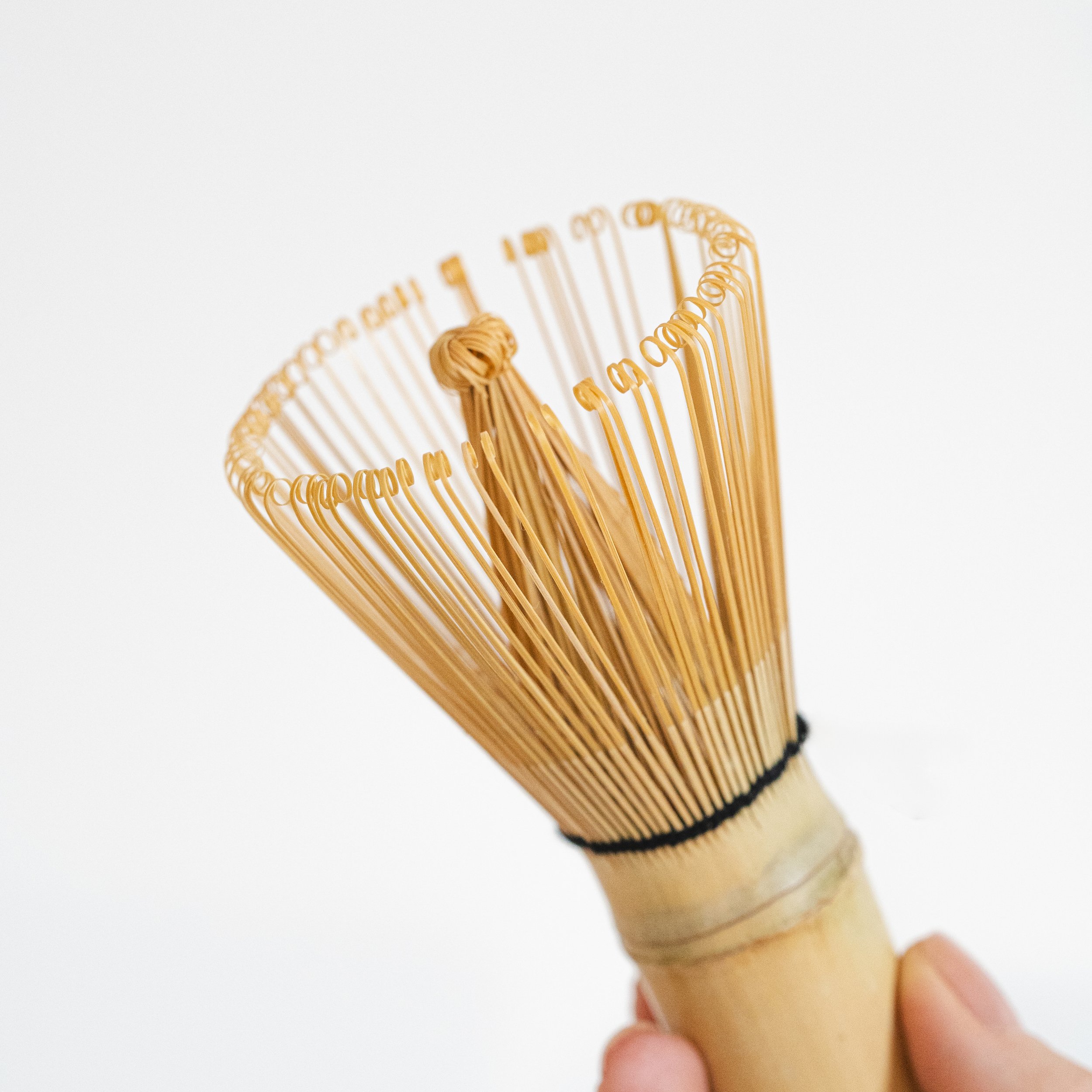
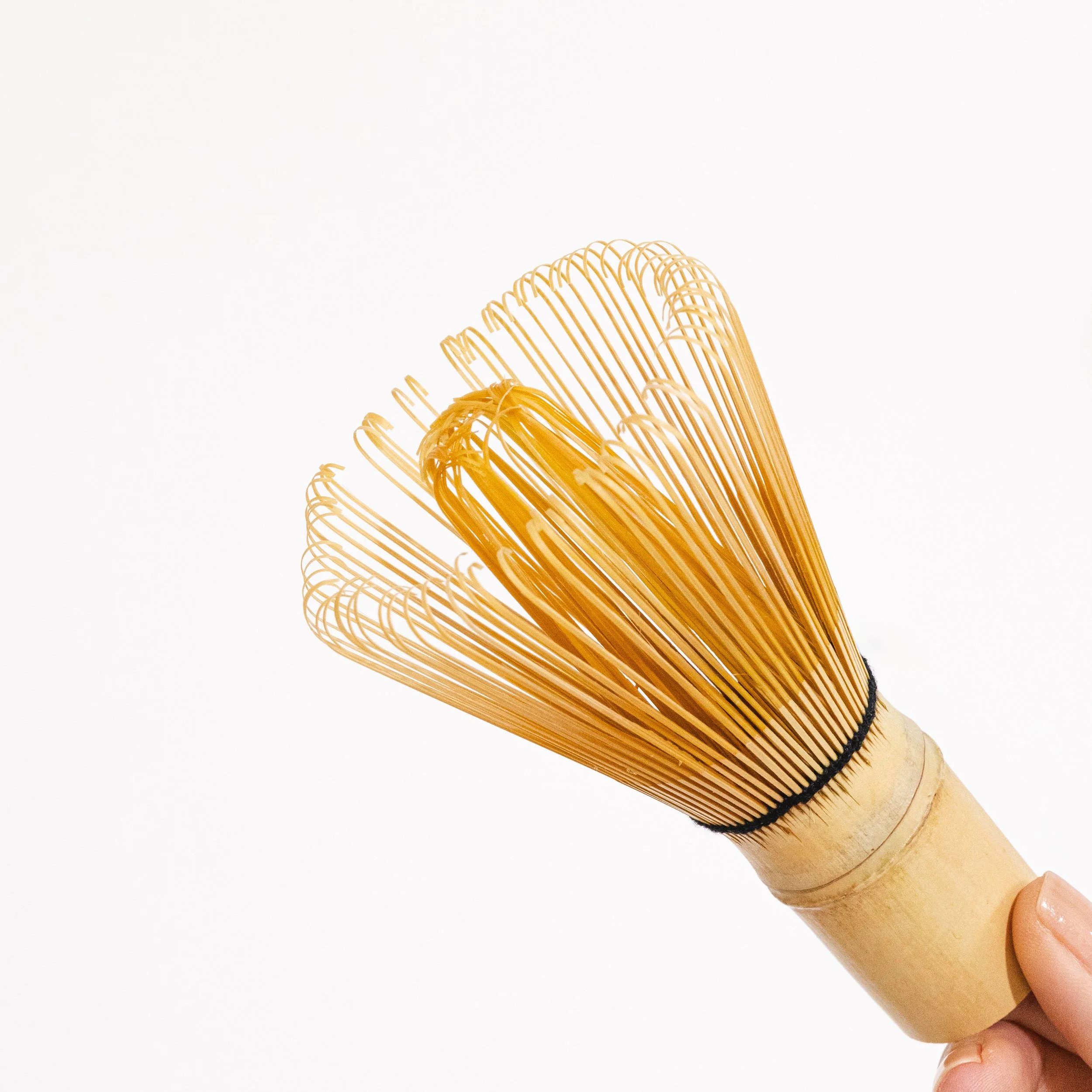
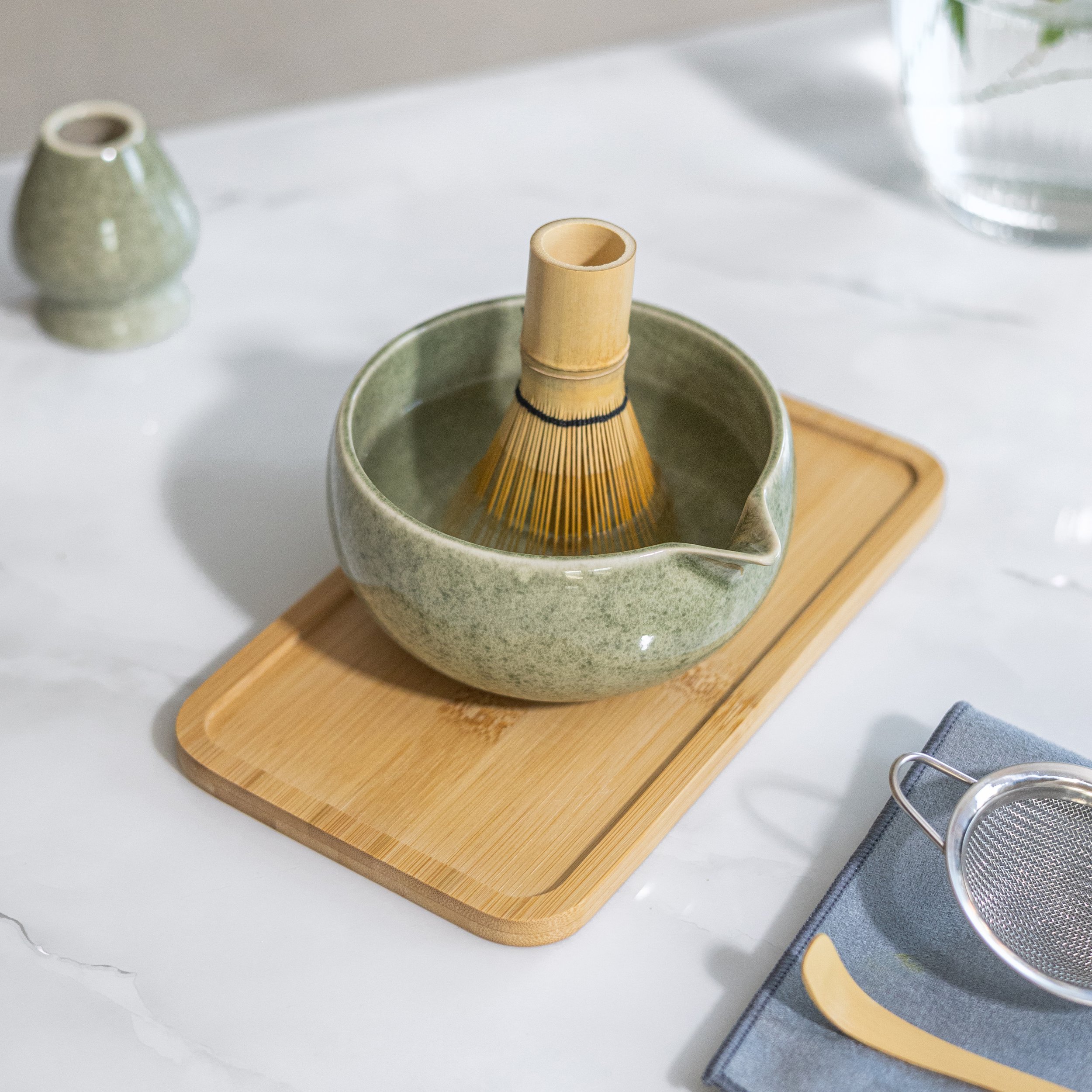
Before whisking matcha, always prepare your chasen:
Fill your bowl with warm water
Submerge the whisk for ~60 seconds to allow the tines to gently open up (or bloom).
Gently shake off excess water
This simple step:
Softens the bamboo tines
Reduces resistance while whisking
Prevents the brittle tines from breakage
Produces finer foam
TIP: The temperature of the warm water used for blooming the matcha whisk should be ~140–158°F (or 60–70°C).
Why this temperature matters?
Below ~140°F /60°C, the bamboo doesn’t soften enough.
Above ~167-176°F (or 75–80°C), the fibers can dry out, become brittle over time and shorten the whisk’s lifespan.
Warm water allows the tines to gently open and relax, preparing the whisk to create smooth foam without cracking.
Preparing Your Whisk Before Each Use
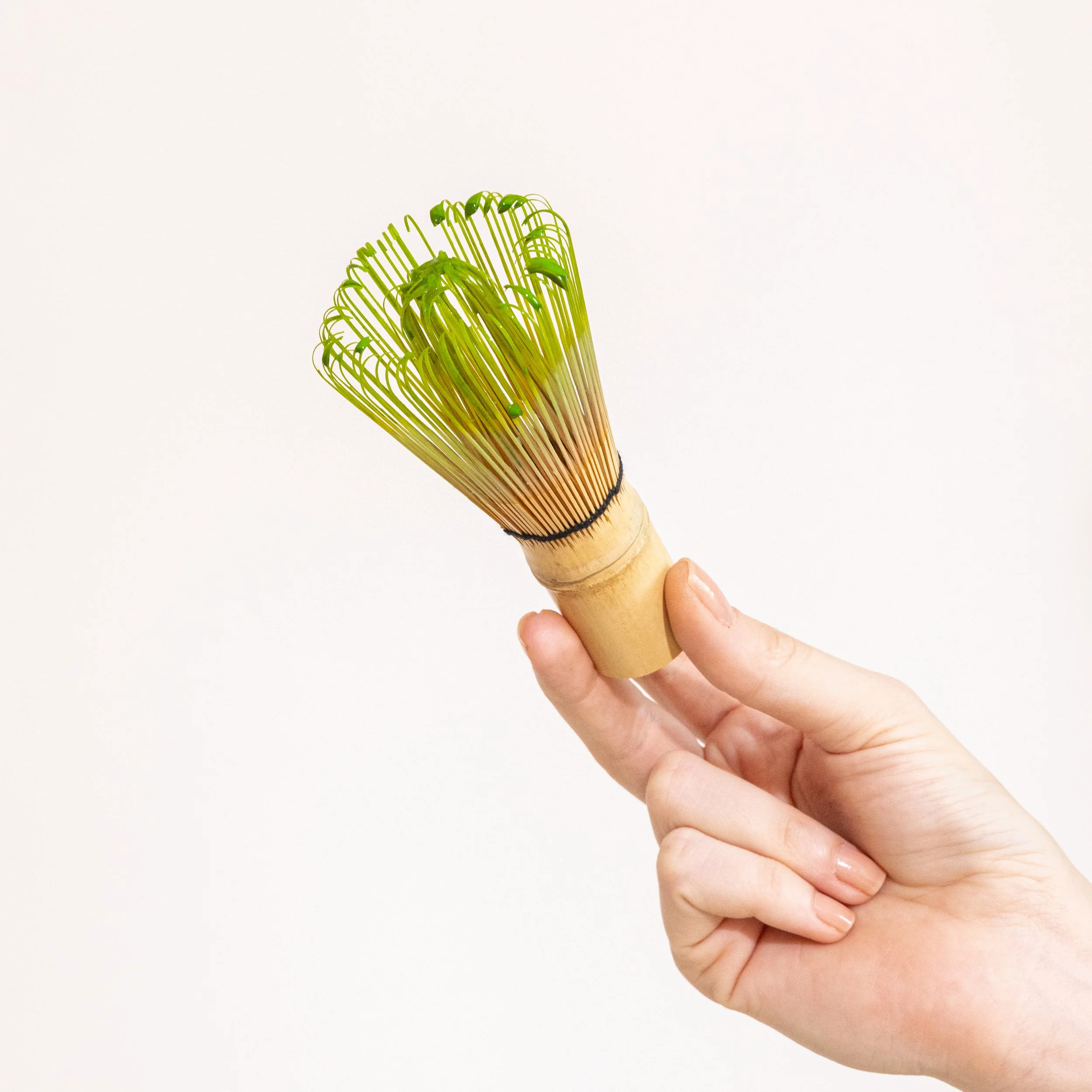
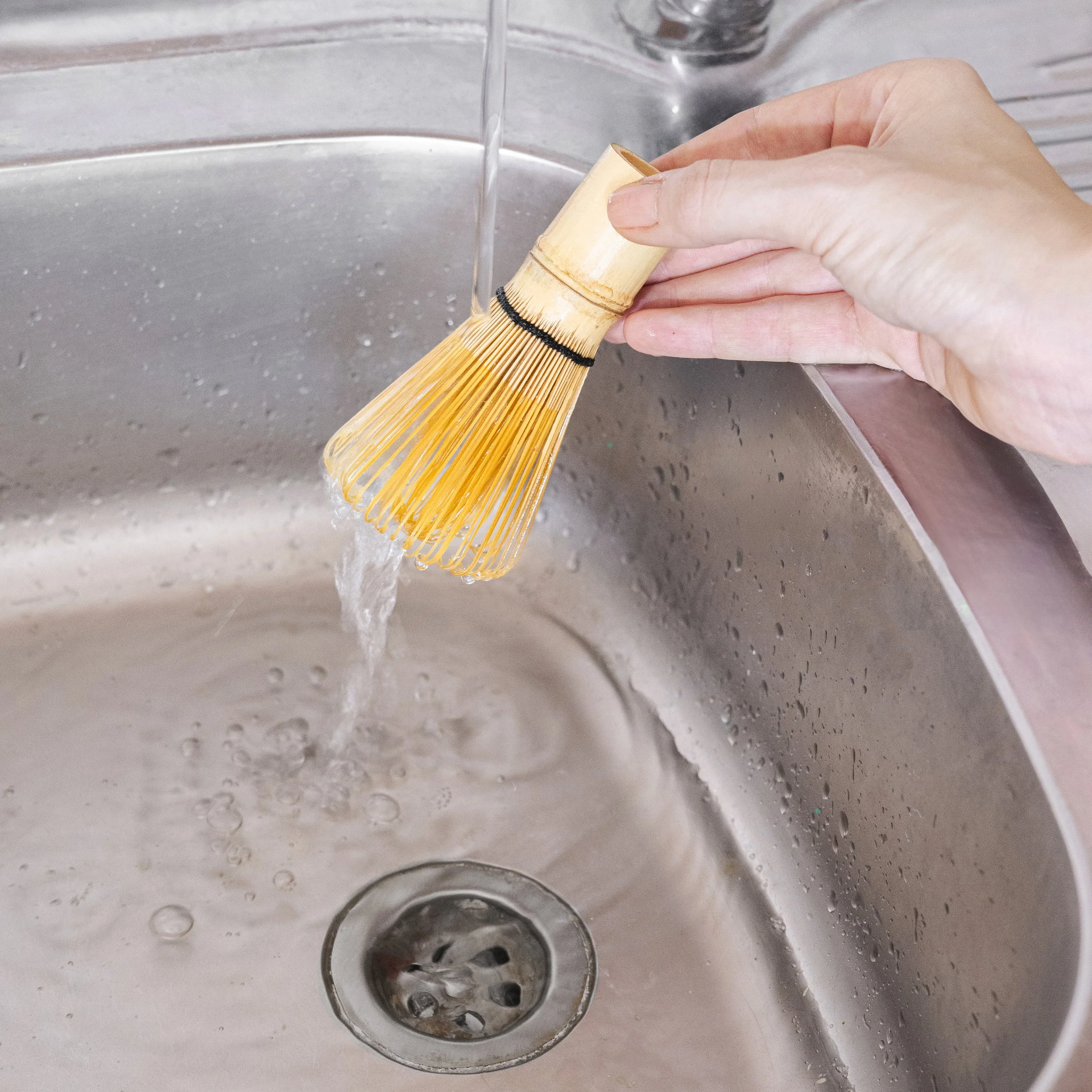
Cleaning should be immediate and gentle.
Steps:
Rinse the whisk under warm running water
Gently move it back and forth to release matcha
Use your fingers to gently remove residue. Do not scrub.
Avoid:
Soap or detergent
Dishwashers
Towels or cloth rubbing
Soap dries out the bamboo tine and results in cracking over time.
Cleaning Your Whisk
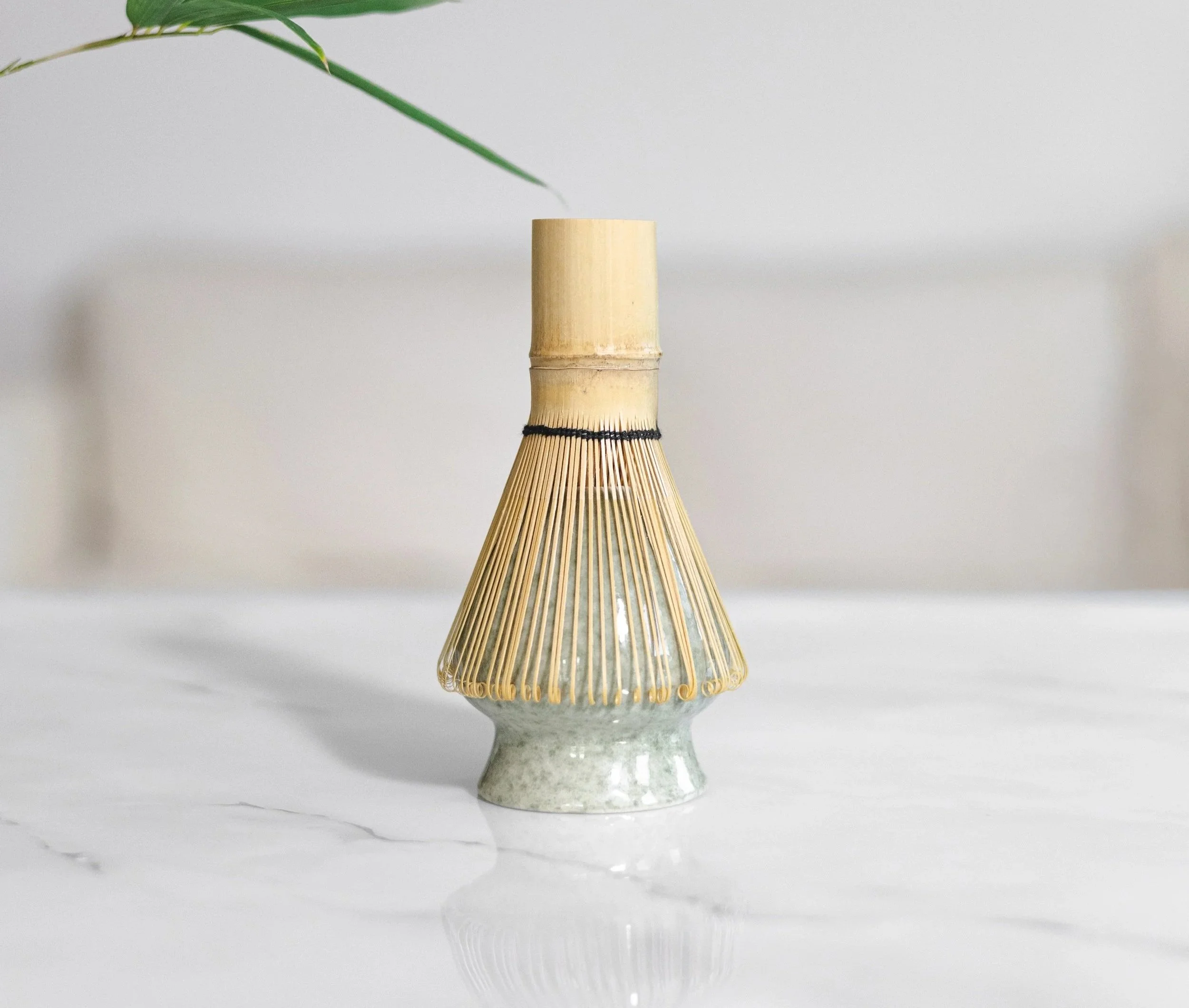
After rinsing clean,
Shake off excess water
Place the whisk upright (with the tines facing up), or preferably on a whisk stand.
Allow it to air dry completely
A whisk stand is preferred as it helps to:
Maintain the whisk’s shape
Improve airflow
Prevent mold or odor
Avoid storing your whisk in closed drawers or damp spaces.
Air Drying Your Whisk & Whisk Storage
With regular care, your whisk will perform better and last longer.
Best practices:
Always bloom before use (~2 min for the first time and 60s subsequently)
Use warm water ~140–158°F (or 60–70°C) for blooming. Avoid hot water above ~80°C
Rinse clean with warm water immediately after use
Never leave the whisk soaking in water for long periods
Store in a dry, ventilated area, preferably on a whisk stand to maintain the shape
Use only for matcha (not other drinks)
Over time, the whisk will naturally soften — this is normal and beneficial for whisking.
A Living Tool for a Living Ritual
Your matcha whisk is designed to be used, softened and eventually replaced. Each bowl of matcha leaves a trace - not only in flavor, but in the tool itself. Caring for your whisk is a practice in attentiveness, patience and respect - values at the heart of the matcha ritual.
When treated with care, your chasen becomes more than a utensil. It becomes a quiet companion in your daily moments of stillness.
Recap: How to Care for & Maintain Your Whisk
A bamboo whisk is not meant to last forever.
Typical lifespan of a matcha whisk:
Daily use: 2–4 months
Occasional use: 6–12 months
The lifespan depends on frequency of use, whisking intensity, care and drying habits. As the tines soften and spread, performance gradually changes.
It’s time to replace your whisk if:
Many tines are broken or missing
The whisk can no longer create foam
Bamboo begins to splinter
Mold or odor appears
The shape no longer rebounds
Remember, replacing your whisk is not wasteful. It is part of honoring the ritual and maintaining quality.
Replacing Your Whisk
Lesson 3: How to Whisk Matcha
A good bowl of matcha is not about perfection. It is about understanding a few core principles - light grip, sifted matcha powder, correct whisking motion and matching technique to tea style. Once these are in place, whisking becomes intuitive and meditative - a ritual that naturally slows you down.
Basic Techniques & Concepts
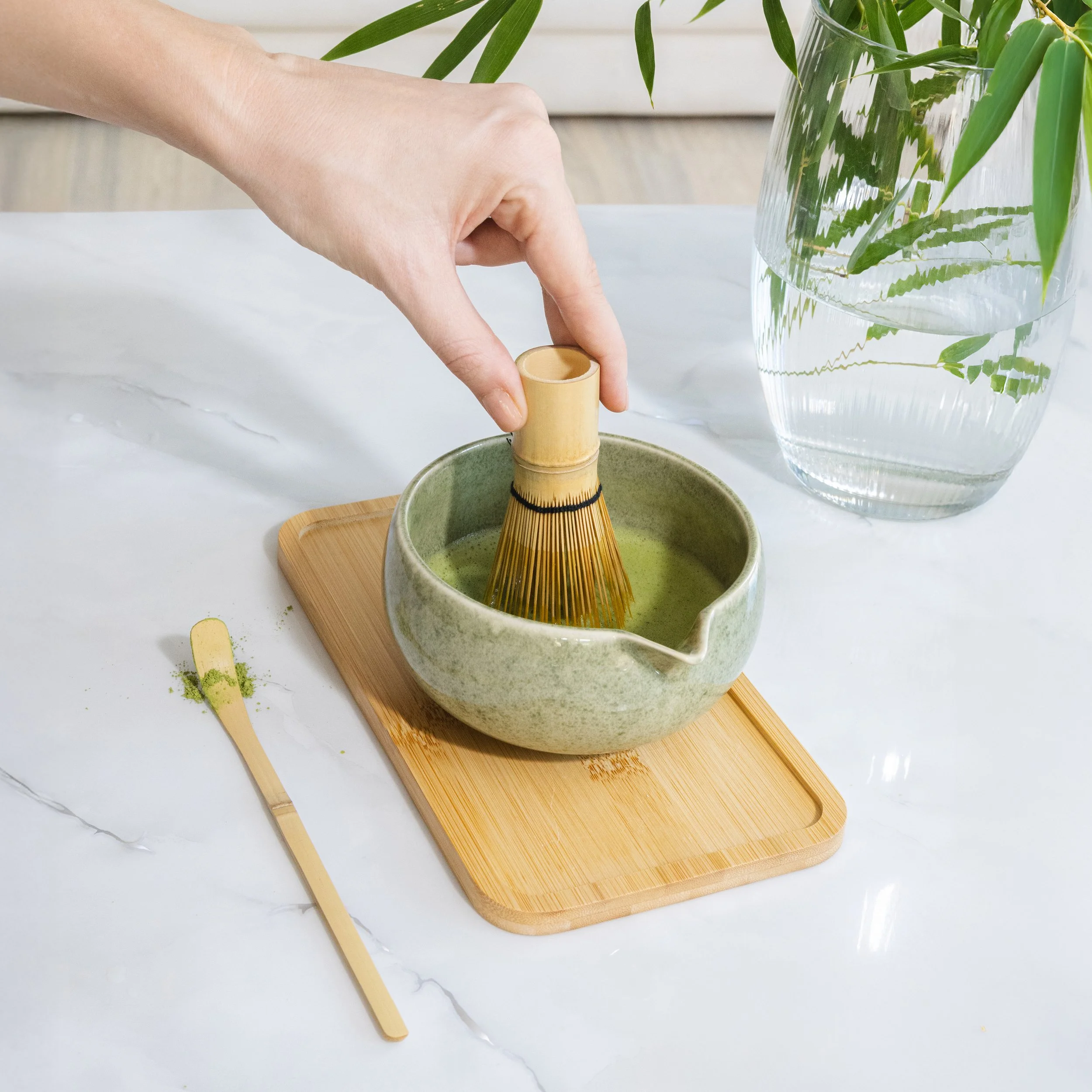
How to hold the matcha whisk
Correct grip:
Hold the whisk lightly, using your thumb and first two fingers
Keep your wrist relaxed and flexible
Avoid gripping the handle tightly or using arm strength
The whisking motion should come mostly from the wrist, not the elbow or shoulder. A relaxed grip allows the whisk’s fine tines to glide across the bowl, introducing air gently without crushing the bamboo tines.
Think: light, quick and controlled - not forceful.
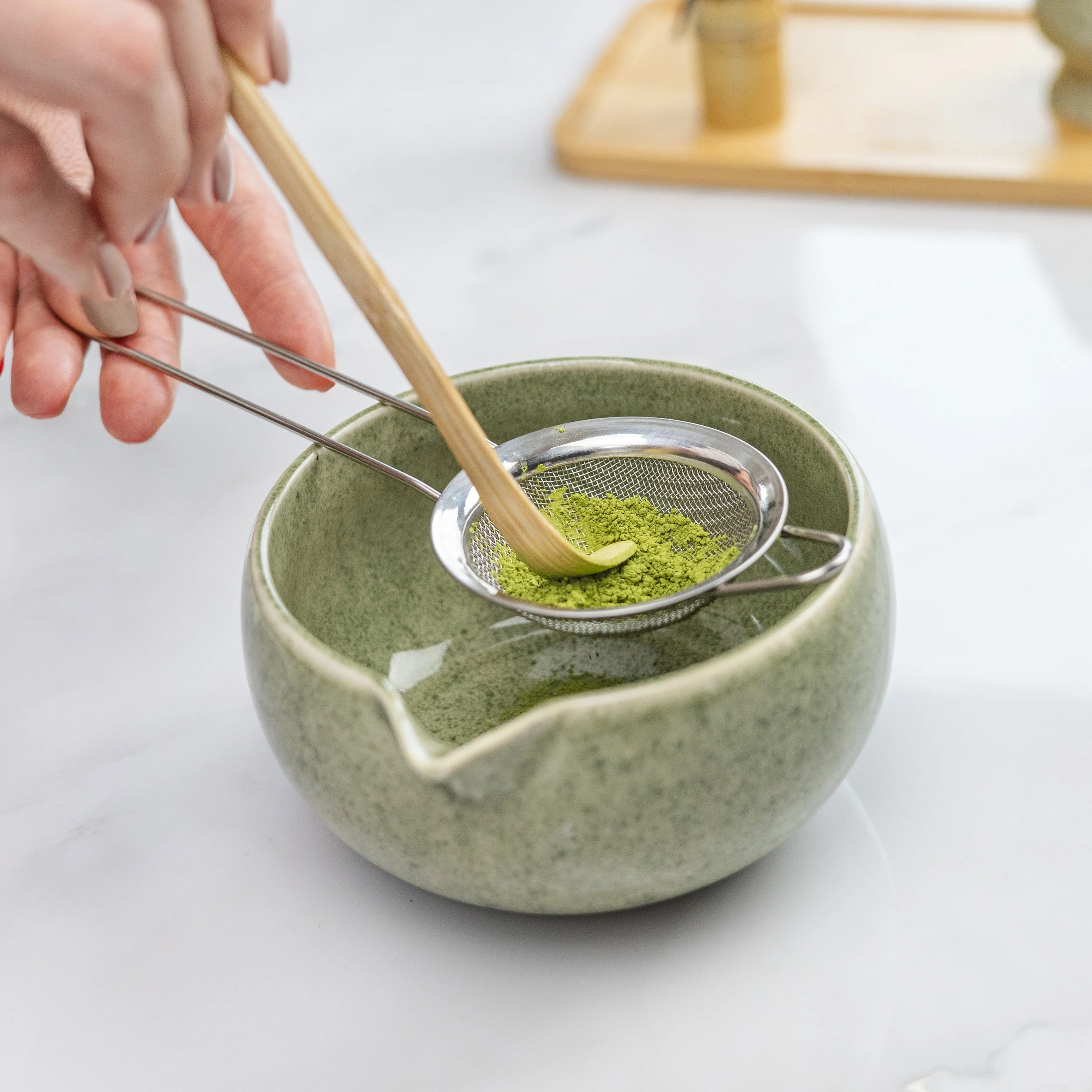
Sieve your Matcha Powder
Matcha is an ultra-fine powder that naturally clumps due to static and moisture. Sieving (sifting) breaks these clumps before water is added. This small step alone can dramatically improve your matcha, especially for beginners.
Why sieving is important:
Prevents gritty texture
Makes whisking easier
Improves foam quality
Ensures even flavor distribution
How to do it:
Scoop the matcha powder into a fine sieve/sifter
Gently tap or press through with the tea scoop
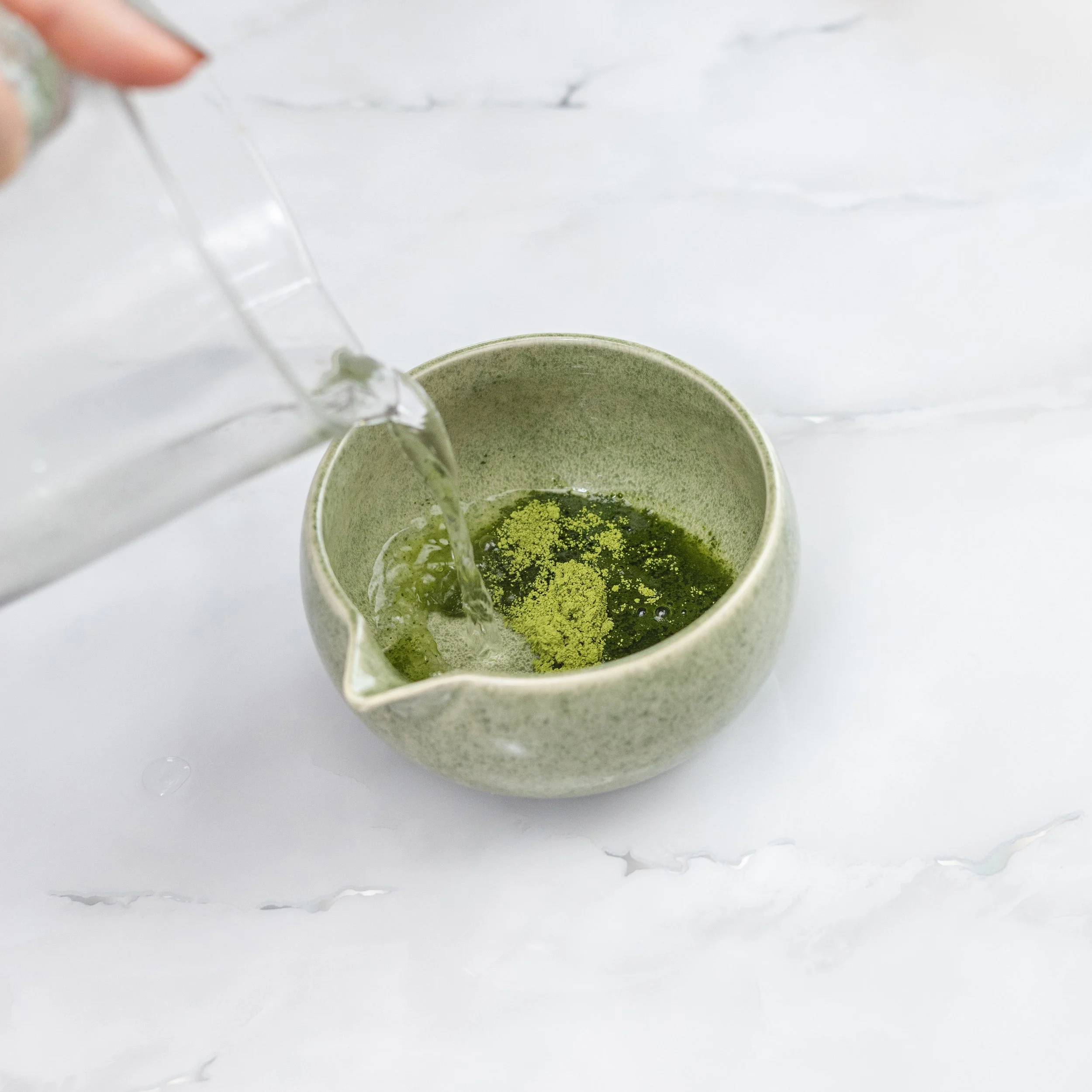
Add Water in the Range of 158–176°F (70–80°C)
Why this matters:
Water above 176°F /80°C destroys some of matcha’s delicate flavor compounds and increases astringency. Matcha tastes harsh, overly green or drying on the palate.
Water that is below 158°F /70°C may taste flat as the sweetness and umami are not fully released. The matcha powder does not suspend evenly and clumps are harder to break down.
Do you know?
Matcha is very sensitive to heat. Although the difference between 158–167°F (70–75°C) and 167–176°F (75–80°C) may seem small, it can have a noticeable impact on flavor, aroma, texture and foam.
Try experimenting with different water temperature to uncover your preference.
A lower temperature range of 158–167°F (70–75°C) preserves more of the matcha’s natural sweetness and umami. You’ll notice a brighter natural sweetness, more pronounced umami, less bitterness or astringency, a creamier and rounder mouthfeel and finer/silkier foam.
The slightly higher temperature range of 167–176°F (75–80°C) extracts more compounds from the tea giving a bolder and more robust green tea flavor and aroma. But there’s slightly more bitterness or edge. Foam forms quickly but may be coarser. Suitable for matcha lattes (where milk softens bitterness), iced matcha (starts stronger before dilution) or matcha drinkers who prefer a more assertive taste.
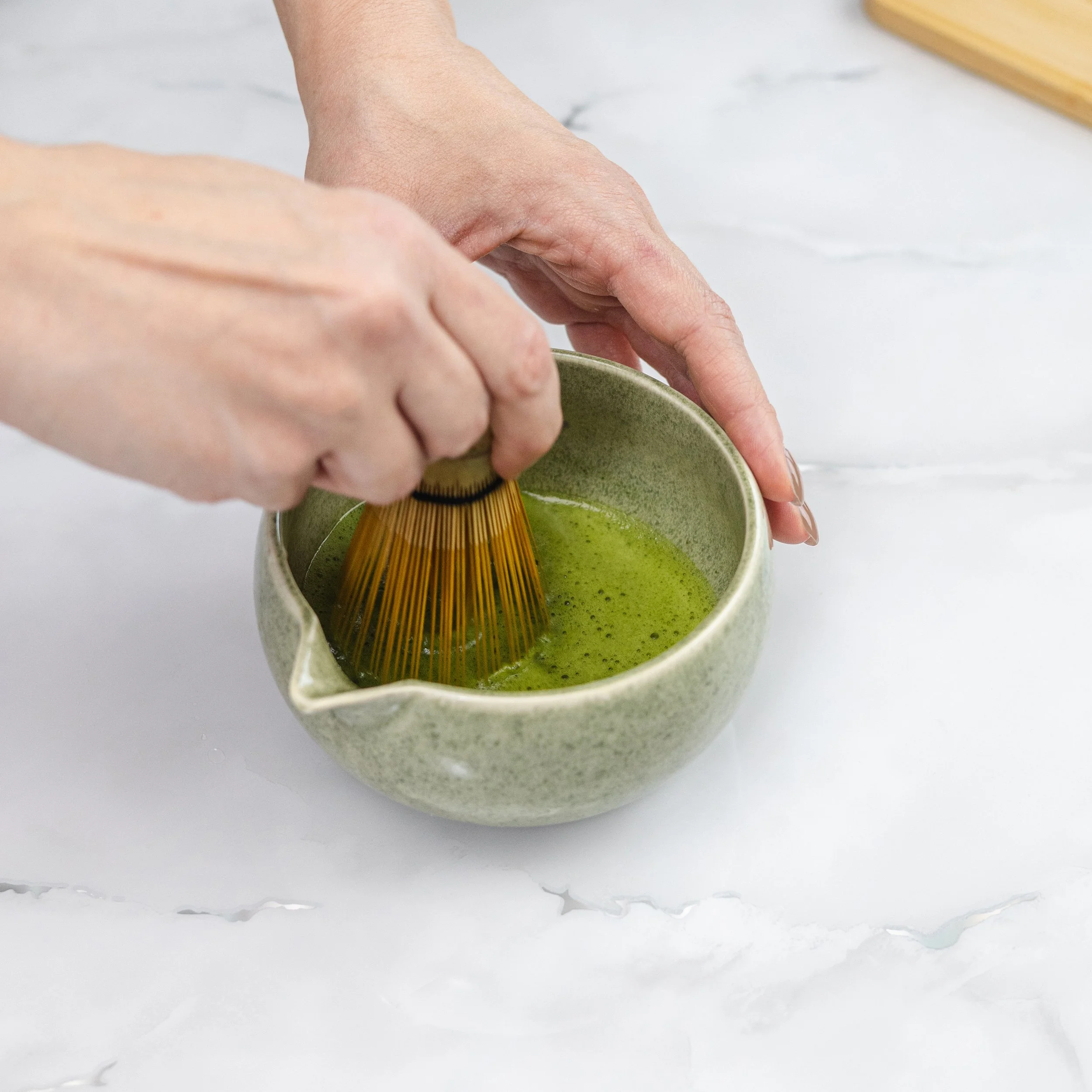
Whisk in a W-Motion
The correct whisking motion is to whisk briskly in a W or M shape, moving from one side of the bowl to the other.
The W/M motion breaks up clumps and introduces fine air bubbles into the suspension, creating a smoother and creamier texture.
Recall: Keep your wrist relaxed and firm. The whisking motion should come from the wrist, not elbow or arm strength.
The whisk should be kept slightly above the bottom of the bowl (avoid scraping the bottom as it will damage the bamboo tines).
Finish by gently smoothing the bubbles on the surface with a slow lift of the whisk .
Why not stir or whisk in a circular motion?
Circular motions push powder around the bowl, instead of suspending it.
As a result, it fails to introduce air into the suspension resulting in a flat, uneven or clumpy matcha.
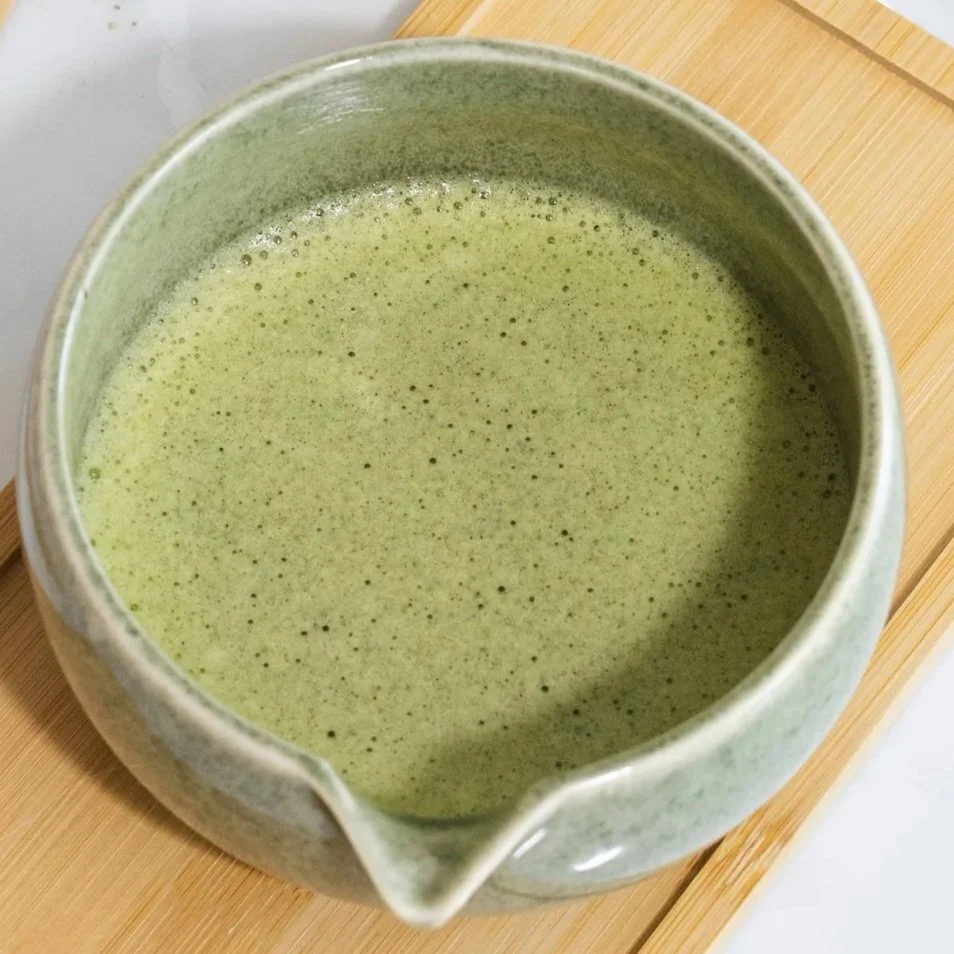
Is Matcha Foam Important?
Foam in matcha is not merely decorative - it plays a functional role in aroma, texture, heat retention and flavor balance. However, the amount and importance of foam depend on the style of matcha being prepared and the character of the tea. Foam should be understood as a product of technique, not the goal.
Usucha (Thin Matcha): Foam Is Desirable, but Not One-Size-Fits-All
In usucha, a layer of fine foam often indicates that the matcha has been properly whisked and evenly suspended.
What good foam does:
Helps keep fine matcha particles evenly suspended
Creates a smoother, creamier mouthfeel
Softens sharp or bitter edges
Improves overall balance
How foam enhances aroma:
Fine micro-foam traps delicate aromatic compounds released from the tea. This foam acts like a soft aromatic cap, holding fragrance at the surface and releasing it gradually as you drink. Aroma and taste arrive together, making the matcha feel rounder and slightly sweeter rather than sharp or aggressive.
The thickness of the foam is a choice, not a rule:
Usucha can be enjoyed with little to no foam, medium foam or a more frothy style (the most common preference today).
More foam tends to mellow bitterness and harshness, but also the complexities of the tea
Less foam allows stronger aroma and a more direct, intense expression of the tea
Why Fine Foam Matters (Not Big Bubbles)
Tight, silky micro-foam enhances the matcha experience.
Large, airy bubbles pop quickly, releasing aroma unevenly. They often indicate
Poor whisking technique
Incorrect water temperature
Matcha that wasn’t properly sifted
Fine foam remains stable long enough to guide aroma smoothly to the nose while maintaining a refined texture.
Koicha (Thick Matcha): No Foam by Design
Koicha is intentionally prepared without foam using a slow kneading motion. The texture should be dense, glossy and syrup-like. Aroma is meant to be potent and direct, not softened.
Matcha Lattes: Foam Is Optional
In matcha lattes, milk already adds body, aroma and sweetness. Foam may also come from the milk (hot foam or cold foam). Matcha foam itself is less critical, but more of a stylisic choice. The focus shifts to balance between tea, milk and sweetness.
Understanding foam helps you choose the right technique, whisking style and intention, turning matcha from a drink into a mindful ritual.
Usucha (薄茶) vs Koicha (濃茶)
Usucha (薄茶) - Thin Tea: Light, everyday matcha
Ratio: 1–2g matcha, 60–70ml hot water
Technique: Fast whisking, W or M motion, Aim for smooth foam
Best for: Daily drinking, Beginners, Matcha lattes, Iced matcha
Flavor: light, fresh, gently sweet
Koicha (濃茶) - Thick Tea: Rich, ceremonial matcha
Ratio: 3–4g matcha, ~30ml hot water
Technique: Slow, kneading motion; No foam
Best for: High-quality ceremonial matcha, Quiet and intentional rituals, Experienced drinkers
Flavor: deep, umami-forward, intense
Step-by-Step Instructions to Making Matcha
-
Pre-soak the bamboo whisk for about 1-2 minutes to soften the tines and warm the tea bowl.
-
Pour away the water and wipe the bowl completely dry.
-
Tip: Make sure that the bamboo tea scoop, sifter and tea bowl are completely dry to prevent any clumping.
-
This helps to remove clumps.
-
Do not use boiling water.
-
Using the pre-soaked whisk, press any loose powder gently into the water.
Whisk gently but vigorously in a fast zigzag (or “W”) motion for about 30 seconds until frothy.
-
Then continue whisking slowly at the surface for another 30 seconds to 1 minute to break up large bubbles into smaller ones, creating a smooth, silky micro-foam.
-
Drink direct from the tea bowl or pour the hot matcha into tea cups to enjoy.
Lesson 4: How to Make Iced Matcha Latte
-
Pre-soak the bamboo whisk for about 1-2 minutes to soften the tines and warm the tea bowl.
-
Pour away the water and wipe the bowl completely dry.
-
Tip: Make sure that the bamboo tea scoop, sifter and tea bowl are completely dry to prevent any clumping.
-
This helps to remove clumps.
-
Do not use boiling water.
-
Using the pre-soaked whisk, press any loose powder gently into the water.
Whisk gently but vigorously in a fast zigzag (or “W”) motion for about 30 seconds until frothy.
-
Then continue whisking slowly at the surface for another 30 seconds to 1 minute to break up large bubbles into smaller ones, creating a smooth, silky micro-foam.
-
Optional: Add honey, maple syrup, or any sweetener of your choice to taste.
-
Stir gently and enjoy a refreshing, calming moment.
Lesson 5: Common Mistakes
Selecting and Storing Matcha
-
Why it’s a problem:
Low-quality matcha is often bitter, dull in color and gritty, making it difficult to enjoy even with good technique.Better approach:
Look for vibrant green color (not yellowish or olive)
Choose ceremonial or premium/barista grade for drinking
Avoid matcha without origin or harvest details
-
Why it’s a problem:
Matcha oxidizes quickly. Exposure dulls flavor, aroma, and color.Better approach:
Store matcha airtight
Keep it refrigerated after opening
Protect it from light and moisture
-
We combine a thoughtful, human-centered approach with clear communication and reliable results. It’s not just what we do—it’s how we do it that sets us apart.
Care, Maintenance & Storage of Matcha Tools
-
Why it’s a problem:
Dry bamboo tines are stiff and prone to cracking.Better approach:
Soak the whisk in warm water (60–70°C) for 1 minute before use
-
Why it’s a problem:
Soap dries bamboo fibers and shortens the whisk’s lifespan.Better approach:
Rinse bamboo tools with water only
Never use detergent or dishwasher
-
Why it’s a problem:
Moisture leads to odor, warping, or mold.Better approach:
Air-dry tools completely
Store in a well-ventilated, dry space
Use a whisk holder to maintain shape
-
Why it’s a problem:
Bamboo whisks are consumable tools - not permanent ones.Better approach:
Replace whisk every 2–4 months (daily use) or 6–12 months (occasional use)
Whisking Matcha
-
Why it’s a problem:
Matcha clumps easily, causing gritty texture and uneven flavor.Better approach:
Always sift matcha before adding water
-
Why it’s a problem:
Below 70°C → flat, weak, clumpy
Above 80°C → bitter, harsh, coarse foam
Better approach:
Use water at 70–80°C
For sweeter matcha: 70–75°C
For stronger matcha or lattes: 75–80°C
-
Why it’s a problem:
Circular stirring moves powder around instead of suspending it.Better approach:
Whisk briskly in a W or M motion
Use wrist movement, not arm strength
-
Why it’s a problem:
This damages the whisk and creates uneven foam.Better approach:
Let the whisk float lightly above the bowl’s base
-
Why it’s a problem:
Foam is a result of good technique, not the objective.Better approach:
Focus on the whisking technique, achieving even suspension and balance
Let foam form naturally
Making Matcha / Matcha Lattes
-
Why it’s a problem:
Incorrect ratios lead to watery or overly bitter drinks.Better approach:
Start with these recommended ratio and adjust according to your preference
Usucha: 1–2g matcha / 60–70ml water
Latte base: slightly stronger matcha (3g matcha / 30 ml water) before adding milk
-
Why it’s a problem:
Milk prevents matcha from dissolving properly, causing clumps.Better approach:
Always whisk matcha with hot water first
Add milk only after matcha is smooth
-
Why it’s a problem:
Cold temperatures reduce aroma and foam stability.Better approach:
Make a strong / concentrated hot matcha base, then pour over ice
-
Why it’s a problem:
Some matcha shines when drunk plain, others work better with milk.Better approach:
Experiment with different matcha powders.
Higher-grade matcha may be required for plain drinking compared to milk-based matcha drinks.
Other Common but Overlooked Mistakes
-
Why it’s a problem:
You miss aroma, texture and the calming effect.Better approach:
Sip slowly
Let aroma and flavor arrive together
-
Why it’s a problem:
Rushing removes the grounding benefit of the ritual.Better approach:
Use matcha as a transition moment
Even 3-5 quiet minutes make a difference
Troubleshooting Tips
-
Why it happens
Matcha wasn’t sifted
Powder absorbed moisture
How to fix
Always sift matcha before whisking
Ensure that all tools (except whisk) are wiped dry
Store matcha airtight, away from humidity
-
Why it happens
Whisk wasn’t soaked (bamboo tines are too stiff)
Whisking too slowly
Bowl shape is too narrow
How to fix
Pre-soak the bamboo whisk in warm water for at 2 minutes
Whisk quickly using a W motion (not in circles)
Use a wide bowl (chawan) to introduce air
-
Why it happens
Water temperature is off
Matcha is low-grade or it isn’t fresh
Whisking stopped too early
How to fix
Use water around 70–80°C (158–176°F)
Use fresh matcha (within 2–3 months after opening)
High quality matcha powder is vibrant green in color. Avoid matcha powder that is yellowish.
Whisk until foam is glossy and fine, not bubbly
-
Why it happens
Water is too hot
Too much powder
Low-quality or culinary-grade matcha
How to fix
Never use boiling water
Reduce matcha amount slightly
Choose ceremonial or premium matcha. Look out for matcha powder that is vibrant green in colour.
-
Why it happens
Too much water
Too little matcha
How to fix
Use 1–2g (or 1-2 scoops) matcha per serving with 60-80 ml water
Taste before adjusting amount of water
Matcha
-
Why it happens
Matcha not strong enough before adding milk
Milk overpowering the tea
How to fix
For lattes, whisk matcha with less water
Try whisking 3 g (or 3 scoops) matcha with 30 ml water before adding to 80-90 ml of milk. Adjust the amount of matcha powder (by increasing or decreasing 0.5g) to your taste, if needed.
Some milk has a stronger flavor that might overpower the matcha flavor. You might need to test different brands to find the right milk.
-
Why it happens
Matcha not fully dissolved
Milk added too quickly
How to fix
Whisk matcha until fully smooth before adding milk
Stir gently after pouring
-
Why it happens
Matcha powder is not sifted
Powder clumps trapped in milk
How to fix
Sift matcha every time
Whisk thoroughly with water before adding milk
-
Why it happens
Water too hot
Unsweetened matcha paired with certain milks
How to fix
Lower water temperature. Recommended water temperature is between 70°C to 80°C (158°F to 176°F)
Add a small amount of sweetener (honey, vanilla, maple)
Try oat or soy milk for natural sweetness
Matcha Latte
FAQs
Getting Started
What exactly is matcha?
Matcha is finely ground green tea powder made from shade-grown tea leaves. Unlike regular tea, you drink the entire leaf, which gives matcha its vibrant color, rich flavor, and calming yet focused energy.
Is matcha difficult to make at home?
No. Matcha looks ceremonial, but the basics are simple. Once you learn a few fundamentals (water temperature, whisking motion and ratios), making matcha becomes a quick, calming ritual that takes 3–5 minutes.
Why do I need to whisk matcha instead of just pouring water over it?
Unlike infused green tea which uses whole leaves steeped in water, matcha is the powdered form of the whole leaves. The powder doesn’t dissolve in water on its own. Hence, simply pouring water over it causes clumps, uneven texture and bitterness. Whisking breaks up the powder, suspends it evenly, improves flavor and mouthfeel and creates a light foam that enhances aroma and texture. It also ensures you enjoy the full nutrients in every sip, while turning preparation into a calm, mindful ritual.
Do I need special tools to start?
To get started, you’ll need:
Matcha powder
Tea bowl
Bamboo whisk (a whisk stand is preferred for proper storage)
Sifter
A bamboo whisk makes a big difference in texture and foam, but you don’t need a full ceremonial setup to begin.
Matcha Powder
What kind of matcha should beginners buy?
Beginners should look for ceremonial or premium-grade matcha that is:
Bright green
Smooth and fine
Mildly sweet and umami (not bitter)
Avoid dull, yellowish matcha or powders labeled only for baking if you plan to drink it plain.
Why does matcha taste bitter sometimes?
Common causes include:
Water that’s too hot
Low-quality or stale matcha
Too much powder
Not enough whisking
How should I store matcha at home?
Keep it airtight
Store in the refrigerator after opening
Protect from light, heat, and moisture
Once opened, matcha is best used within 2–3 months.
Water & Temperature
What water temperature should I use?
The ideal range is 70–80°C (158–176°F).
70–75°C → smoother, sweeter, more umami
75–80°C → bolder, stronger, better for lattes
Avoid boiling water — it causes bitterness.
Can I use boiling water if I don’t have a thermometer?
It’s best not to. Let boiled water sit for 3–5 minutes before using, or mix hot water with a little room-temperature water.
Whisking & Technique
Why do I need to whisk matcha instead of stirring?
Matcha doesn’t dissolve like instant drinks. Whisking:
Breaks up clumps
Suspends the powder evenly
Improves flavor and texture
Creates fine foam that enhances aroma
Stirring usually leaves matcha gritty and uneven.
Do I have to sift matcha every time?
Sifting isn’t mandatory, but it makes a noticeable difference - especially for beginners. It helps prevent clumps and makes whisking easier.
What motion should I use when whisking?
Use a quick W or M motion, not circles.
This introduces air evenly and helps create smooth, fine foam.
Is foam required for good matcha?
It depends on the style:
Usucha (thin matcha): Fine foam is desirable
Koicha (thick matcha): Foam is not correct
Matcha lattes: Foam is optional
Foam is a result of good technique, not the goal itself.
Matcha Lattes
How is matcha latte different from plain matcha?
Plain matcha highlights the tea’s natural flavor.
Matcha lattes add milk for creaminess and sweetness, making them more approachable for beginners.
Should I whisk matcha with milk directly?
No. Always whisk matcha with hot water first until smooth, then add milk. Milk prevents matcha from dissolving properly if added too early.
Which milk works best for matcha lattes?
Popular options:
Oat milk → naturally sweet, creamy
Dairy milk → rich and balanced
Soy milk → traditional pairing in Japan
Almond milk → lighter, nuttier
Choose what suits your taste.
Do I need to sweeten matcha lattes?
Not always. High-quality matcha can be naturally sweet. If needed, start with a small amount of:
Honey
Maple syrup
Vanilla syrup
Daily Ritual & Lifestyle
Can I drink matcha every day?
Yes. Many people enjoy 1–2 servings daily. Matcha provides a calmer, longer-lasting energy compared to coffee due to its natural L-theanine content.
Is matcha better in the morning or afternoon?
Morning: for focus and calm energy
Afternoon: as a gentle pick-me-up
Avoid late evenings if you’re sensitive to caffeine.
How long does a daily matcha ritual take?
Once familiar, 3–5 minutes.
The ritual isn’t about time - it’s about creating a small pause in your day.
What if my matcha doesn’t look or taste perfect?
That’s normal. Matcha is a practice, not a performance. Each bowl is slightly different and improvement comes naturally with repetition.
Beginner Tip - Start simple. Focus on warmth, rhythm, and attention, not perfection.
With a few basic principles, matcha becomes less about technique and more about presence, turning a daily drink into a grounding ritual.
How has your matcha ritual been?
Feedback & Review
We’re grateful for every piece of feedback - whether it’s a quiet note to us or an honest review on Amazon.
If you purchased your Moku Living set through Amazon and feel open to sharing your experience, you can leave a review directly on your Amazon order. Reviews help other customers make thoughtful choices and help small brands like ours continue creating better products.
There’s no expectation to leave a positive review - only an honest one, shared in your own time.
If something didn’t feel quite right, we’d also appreciate hearing from you directly so we can continue improving.
-
Reviews help future customers understand how a product fits into real life. They also help us learn what’s working and what can be improved. We read every review carefully.
-
Yes. If you’d rather reach us directly, you can use our contact form at any time.
You may also choose to share an honest review on Amazon if you purchased there - both are always optional.